Strait of Hormuz: Conflict Continues, but the Global Energy Shift Is Already Under Way

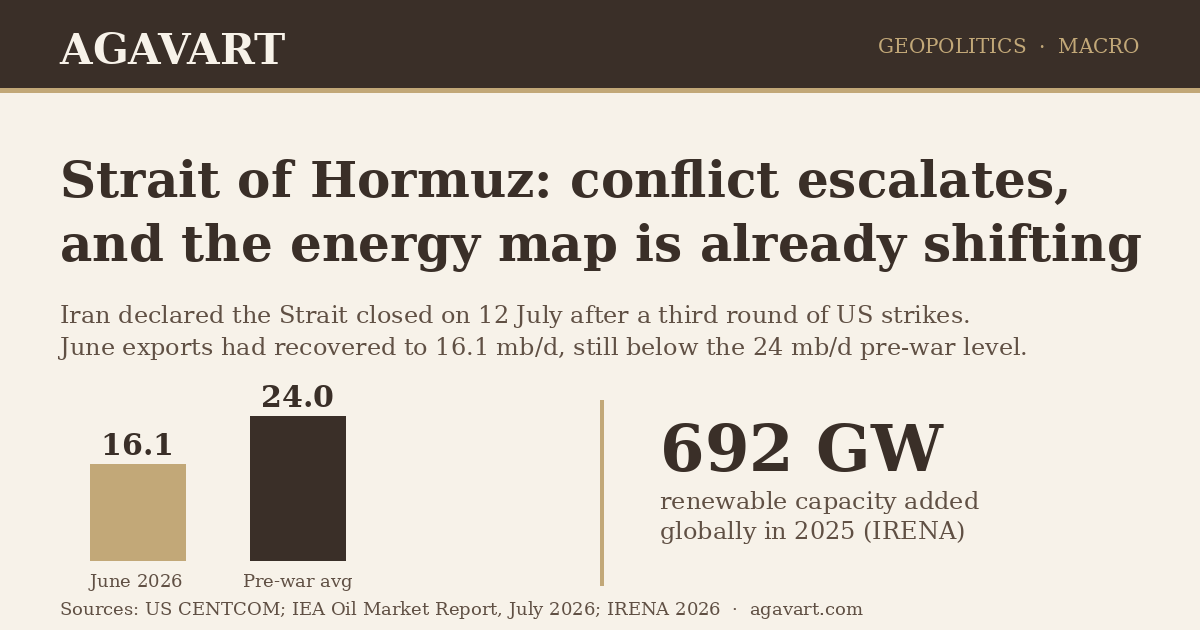
Strait of Hormuz: conflict escalates and June oil exports at 16.1 mb/d

The International Energy Agency’s July 2026 Oil Market Report states that Gulf oil exports rose by 6.5 million barrels a day in June to 16.1 million barrels a day, still below the pre war average of around 24 million barrels a day, while refined product and LPG exports remained well below pre war levels. The … Read more

Fertilizer Prices Diverge After Hormuz Reopening: Urea Falls 34 Per Cent, Freight Cools

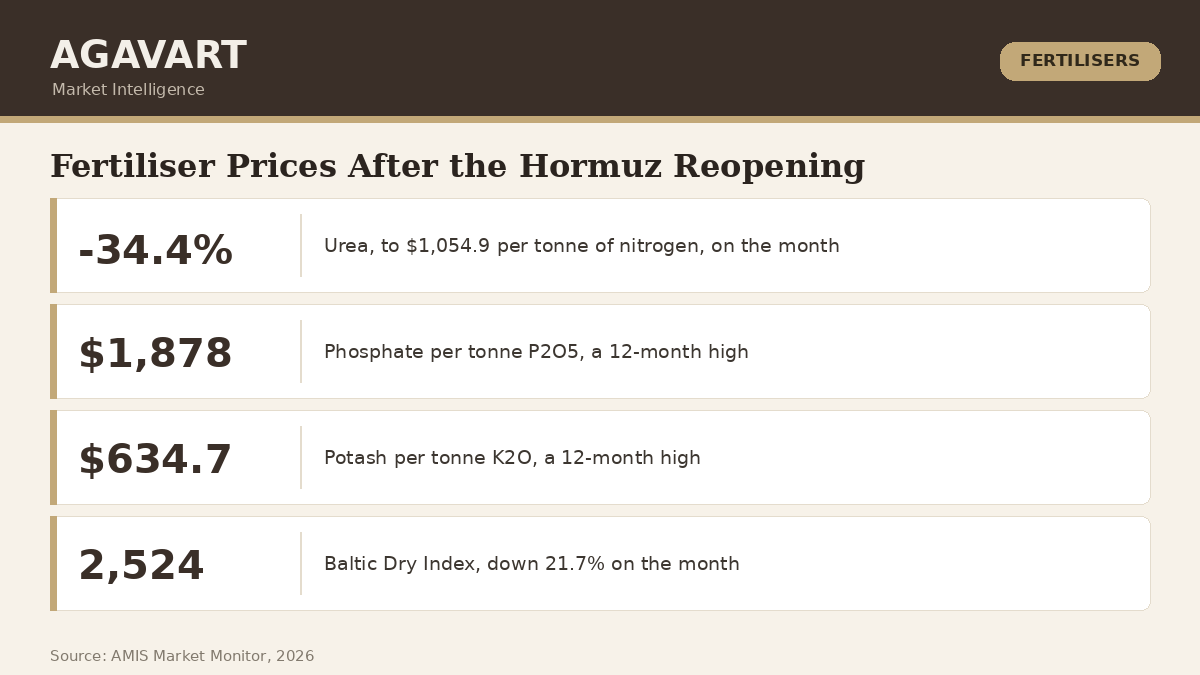
Fertiliser prices after the Hormuz reopening: urea down 34.4%, phosphate $1,878, potash $634.7, Baltic Dry Index 2,524

Urea prices fell 34.4 per cent in June as fertilizer flows through the Strait of Hormuz picked up considerably, while phosphate and potash climbed to 12-month highs, according to the AMIS Market Monitor for July 2026. Ocean freight also cooled, with the Baltic Dry Index down 21.7 per cent on the month, though it remains 69.5 per cent higher than a year ago.

The July Monitor, released by the FAO-hosted Agricultural Market Information System, tracks how fertilizer prices and shipping costs are rebalancing after the Iran-United States memorandum of understanding reopened the region’s key shipping chokepoint.

Read more

2026: The Geopolitics of Grain in the U.S.-Iran Asset Dispute

West Asia Tension Index - geopolitical risk monitor tracking U.S.-Iran grain dispute 2026

Corn, wheat and soybeans became part of a diplomatic dispute between the United States and Iran in June 2026. The issue was not food availability, but whether Iran’s released sovereign assets could be linked to purchases from American farmers. President Donald Trump proposed using part of the released funds to buy U.S. agricultural commodities. Iran … Read more